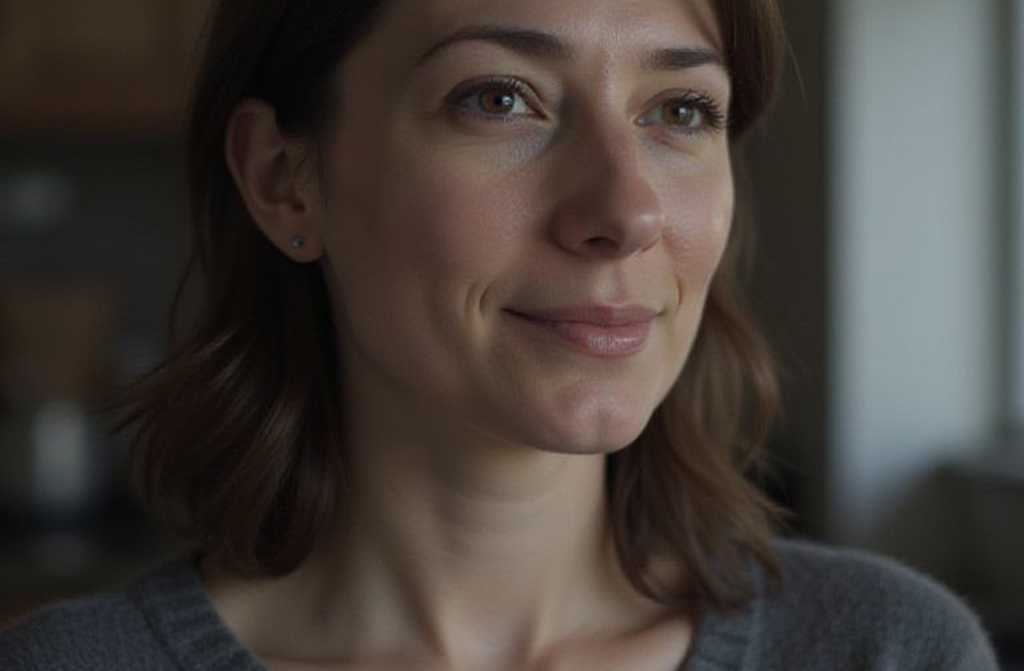
The phone fell silent. Emma stood in the middle of the kitchen, pressing it to her chest with both hands. Aunt Margaret had spoken for exactly four minutes – her voice dry, matter-of-fact, without a single tear.
James sat on the sofa. The television muttered quietly in the background. He didn’t even turn around when Emma appeared in the doorway.
“James. Aunt Margaret called. Mum died an hour ago.”
He nodded. Ran his finger across his phone screen – scrolling through something, not that it mattered anymore.
“Right. Sorry.”
“I need to go. Right now. Two hours’ drive. Give me the car keys.”
James put his phone down. Not because he was moved – because he’d heard the word ‘car’. He looked up at her with an expression of mild annoyance, as if she’d asked him to move a wardrobe.
“No. I need the car. Mum asked me to take her to Aunt Florence’s. I promised last week.”
Emma didn’t move. The light from the kitchen fell on her back, leaving her face in shadow.
“Did you hear what I said?”
“I heard. But she’s already dead. What’s the rush? Take the bus tomorrow, you’ll get there. Mum’s alive. She’s waiting. I made a promise.”
One second. Two. Three.
“Are you serious right now?”
“Absolutely. I’m not letting Mum down.”
Emma walked into the room. She stood right in front of the television – so that James couldn’t see past her. He had to look up.
“I’ll ask you once. Just once. Think about what you just said. Then answer again.”
“Emma, don’t make a scene. I explained. Mum’s waiting, I promised. Your funeral won’t go anywhere overnight.”
“My funeral,” she repeated slowly.
“Well, the funeral. You know what I mean. Go tomorrow. They’ll sort everything without you – there’s your aunt, neighbours.”
Emma leaned a little closer.
“Do you understand this is the last time I’ll ask you for anything? Not the second, not the third. The last.”
“Lord, Emma. You always make a mountain out of a molehill. One day! You can wait one day. Nothing will collapse. Mum asked – I’m going. Full stop.”
“My mother died, James. And yours is going for tea.”
“Don’t twist it. She’s been planning this for ages, Florence is expecting her. I promised. Do you want me to break my word?”
“I want you to remember who you live with. And what this day means to me.”
“I remember. But there’s order to things. The living are more important.”
Emma straightened up. She looked at him as if memorising his face. Not with hatred. With something final.
“Fine,” she said.
That “fine” came out flat. No hurt. No drama. No tremor. James didn’t notice – he was already reaching for the remote.
*
Emma went into the hallway. She opened the top drawer of the dresser – the one James had never opened in seven years. Took out a thick folder with a clasp: her passport, the flat ownership certificate, the car logbook, bank documents. Everything – in her name. She packed them in her bag.
She took both sets of car keys from the hook. Put on her coat. Slipped on her shoes.
“Where are you going?” James called from the living room.
“To say goodbye to my mother.”
“In what? I told you – I need the car!”
Emma opened the front door. James was already in the hallway – barefoot, remote in hand, with the absurd expression of an offended master.
“The car is registered to me. Always has been. The flat too. When I come back, the lock will be different. I’ll leave your things by the door. Collect them yourself, or I’ll put them out.”
“What are you on about?”
“I’m not ‘on about’ anything. I’m telling you. Clearly, once.”
“Emma, wait. Wait! You can’t just…”
“James. My mother died. And you explained to me that you needed the car more – to drive yours to her sister’s tea party. That’s all I needed to hear. There’s nothing between us anymore. Pack your things.”
The door closed. The lock clicked. Downstairs, the main entrance door slammed. A minute later, from the window, he saw her get behind the wheel – calmly, without fuss, without looking back. She started the engine. Drove out of the courtyard. Didn’t even glance up.
James stood in the middle of the hallway. He dialled her number – long rings, no answer. He sent a message: ‘Bring the car back. Have you lost your mind?’ Read. Silence. Another: ‘Stop messing about. Mum’s waiting, I need to go.’ Read. Silence.
Twenty minutes later his mother called.
“James, when are you picking me up? Florence has already set the table.”
“There’s a situation, Mum. Emma took the car.”
“How could she take it? It’s your car!”
“Technically… it’s in her name.”
“So what? You’re the husband! Tell her to bring it back!”
“She’s not answering. I’ll call you back.”
He sat on the sofa. He walked around the flat. Everything looked the same – furniture, curtains, shelves. But Emma had taken out of this house the documents, the keys, and herself. Three things that held it all together.
The phone rang. Emma. He grabbed it.
“Emma! Finally. Listen, let’s not—”
“Shut up,” she said. Quiet and short, like a click. “I’ll say this once. The flat belongs to me. Grandmother left it, the documents are in my name, you know that perfectly well. I bought the car before the marriage. The money in my account is mine – you haven’t saved a single pound in seven years. In your jacket pocket there’s twenty quid – enough for a taxi for your mother. Just about, but enough.”
“Emma, wait…”
“I’m changing the lock today. I’ll ask the neighbour Irene to let the locksmith in. I’ll pack your things. They’ll be by the door. Two days. Then I’ll put them out.”
“You can’t…”
“I can. Every paper. Every signature. Everything – mine. And in seven years you never even put the kettle in your own name.”
“That’s low!”
“Low is telling your wife she doesn’t need to go to her mother’s funeral – because you need the car to take yours for tea. That’s low. I’m just taking what’s mine.”
Silence on the line lasted four seconds.
“Emma, I went too far. I was stupid, I spoke without thinking. Let’s talk properly when you get back.”
“I’m not coming back to you. We’re done. Don’t call again.”
Dial tone.
James sat with the phone in his hand. He dialled again – the subscriber was unavailable. Again – the same. She’d blocked his number.
He checked his jacket pocket. Two crumpled notes – a ten and a ten. She’d calculated that too: exactly enough for a taxi to Aunt Florence’s and back. Not a penny more.
The card was empty – he checked. Other accounts – zero. He’d never bothered. He always had what Emma gave him. The flat – hers. The car – hers. The money – hers. He’d lived in someone else’s home for seven years and never once thought about it.
His mother was waiting at the entrance. A small figure in a green coat, carrying a bag of treats for her sister. The taxi stopped, she got in, looked around the interior.
“A taxi? Seriously? Where’s the car?”
“Emma took it.”
“So take it back!”
“She’s left in it. For good.”
His mother fell silent. Stared at the back of the front seat.
“What do you mean – for good?”
“Exactly that. She’s gone. Said I have two days to collect my things. She’s changing the lock today.”
“Over what?”
“Over me telling her not to go to the funeral. Said I needed the car more.”
His mother turned to him. Her eyes held not regret – bewilderment. She didn’t understand how a request for a lift to her sister could turn into a catastrophe.
“Well, you really said something there, James.”
“I didn’t think she’d react like this…”
“You should have thought! A woman’s mother just died, and you tell her ‘you can wait’? Were you out of your mind?”
“You asked me to drive you!”
“I asked you to drive me. I didn’t ask you to stop your wife from going to the funeral! You came up with that yourself!”
The taxi drove through the town. The meter ticked. James watched the numbers – they grew, each pound chewing away at his last money. When the car stopped outside Aunt Florence’s house, the meter read sixteen pounds. The return journey would be the same. The remainder – for food. Maybe. For a day.
His mother got out. Turned around. The bag of treats crumpled in her hands.
“And where will you go now?”
“To yours. If you’ll have me.”
“I’ve got a bedroom and a kitchen, James. A camp bed in the cupboard.”
“Then a camp bed.”
She shook her head. Walked to the entrance. The door closed behind her.
James stood on the pavement. In his pocket – twelve pounds in change and crumpled notes. On his card – nothing. Behind him – a town where he no longer had a single square metre.
He took out his phone. Dialled Emma’s number. Long rings. Then a mechanical voice: “The subscriber is unavailable.”
He put the phone away. Looked at his hands – empty. Like everything else.
And Emma, at that moment, stood in the middle of her mother’s living room. Aunt Margaret on one side, neighbours behind. She was doing what she had to do. Saying goodbye. Because for her, the dead deserved no less respect than the living. And certainly more than a husband who, after seven years, had never understood who he was living with.