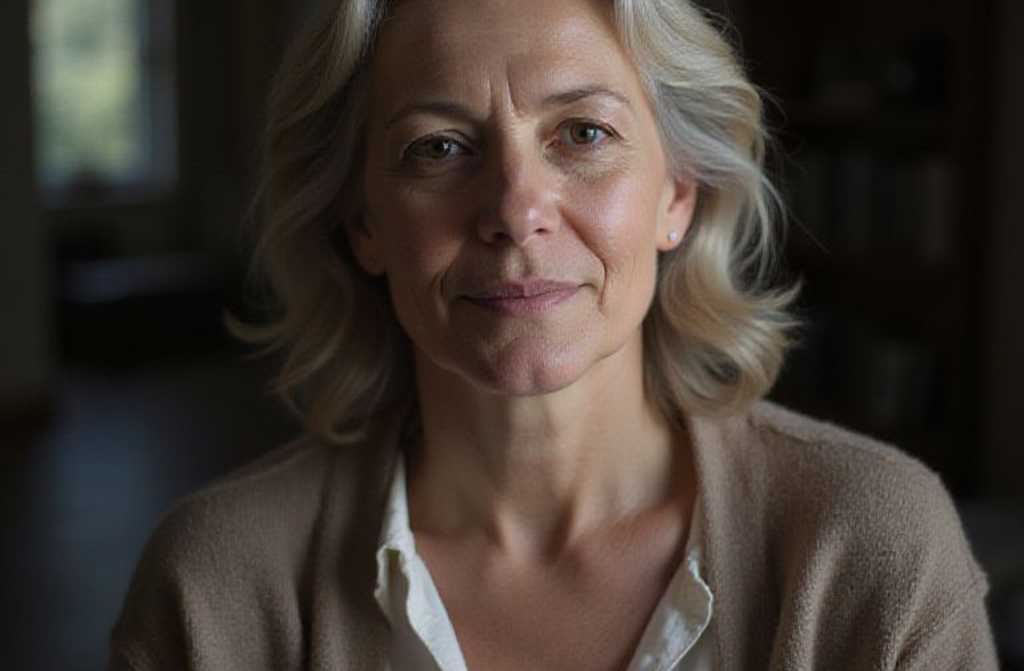
We met at the GP surgery, waiting in line for the doctor. I’d come in because my blood pressure kept spiking; he was waiting for test results. We got talking. David turned out to be a calm, unhurried man.
It had been eight years since my divorce. My son had long moved out. My friends all had their own lives—grandchildren, allotments, endless hospital appointments. And then a real man appeared beside me. No drinking, no shouting, never raises his hands.
Back then I thought: this is it, a gift from fate.
Funny how low we set the bar sometimes. He doesn’t hit me—so he must be good.
David worked in a warehouse. The pay was low, but, as he liked to say, it was “stable.” That word was his favourite.
He was stably tired.
Stably complaining about his back.
Stably unable to help around the house.
And stably expecting dinner on the table by seven o’clock sharp.
When he moved in with me, he brought two travel bags, an old laptop, and his mother on the phone.
She rang every day.
At first I even found it sweet.
A mother worrying about her son.
Then I realised her eternal questions—
“Have you eaten?”
“Did you catch a chill?”
“Emma probably opens the windows—no wonder he’s coughing”—
sounded as if I were starving her son and keeping him in a draught.
The first year seemed bearable enough.
I cooked—he ate.
I did the washing—he wore it.
I bought the groceries—he moaned:
“Everything’s gone up so much.”
And he said it as if I personally had negotiated new prices with the supermarket.
Once a month he handed me money.
A hundred pounds.
Sometimes a hundred and fifty.
And he did it with the expression of someone who’d just paid off the whole mortgage.
“Here, for the house. No unnecessary spending.”
Meanwhile I paid the council tax and utilities, bought food, cleaning supplies, his back medication, socks, whatever meat was on offer.
The worst part is, I actually felt grateful for that money.
That’s what scares me most now.
After dinner David liked to heave a deep sigh.
“This buckwheat is a bit dry. My mother’s is always fluffy and soft at the same time.”
I still don’t understand how that’s possible.
There must be a special magic available only to mothers of grown sons.
Or:
“Not enough salt.”
“Then add some.”
“I’ve already sat down.”
He was settled at the table.
So the whole world had to adapt.
I got up.
Brought the salt.
Then the bread.
Then tea.
Then the remote control, which was literally half a metre away from him.
“Emma, you’re closer.”
Everything was closer to me.
The kitchen.
The bathroom.
The job.
Probably even the afterlife would have been closer to me.
Gradually I started to tire.
Not just physically, though that too.
I’d come home after work, kick off my shoes and dream of five minutes of silence.
Just five.
But from the living room came:
“Why are you so late? I’m hungry.”
Not:
“Are you tired?”
Not:
“Let me put the kettle on.”
Just:
“I’m hungry.”
I always washed the dishes.
David had a special kind of allergy—to the sink.
The moment he saw dirty plates, his bad back would suddenly flare up.
“I’d help, but you know…”
Yes, I knew everything.
Which pills he took in the morning.
Which sausage he preferred.
That his mother couldn’t eat onions.
That David couldn’t lift heavy things, get up early, go to bed late, clean the bathroom, or take out the bin without being reminded.
But what I liked—nobody ever asked.
Once I suggested splitting the bills fifty-fifty.
He looked surprised.
“What do you mean, fifty-fifty? My salary’s smaller.”
“I know.”
“Then why are you putting pressure on me?”
There it was.
I hadn’t asked for diamonds or expensive gifts.
I simply suggested we share the cost of food and utilities.
And suddenly I was a woman who pressures.
That same evening he called his mother.
Deliberately put her on speaker.
After listening, Margaret said coldly:
“Emma, are you trying to turn my son into a lodger?”
I stood at the stove stirring pasta.
I wanted to answer:
“Lodgers at least pay for their keep.”
But I kept quiet.
For now.
Later David found a new job.
Better pay.
But now he had shirts every day.
White.
Light blue.
Striped.
And they all needed ironing.
For the first few weeks I did it after work.
After dinner.
After cleaning.
I stood at the ironing board while the telly played in the room and David lay on the sofa.
“You’ve ironed the sleeve badly.”
“David, I’ve been doing this for an hour.”
“Well, I’m not asking for myself. I need it for work.”
The next day Margaret showed up without warning.
She’d brought her son homemade cheese scones and set them on the table as if to say:
“This is what proper food looks like.”
I was cutting a salad at the time.
Then came that Thursday.
The hardest one yet.
I got home almost nine in the evening.
In my bag were apples and yoghurt—for me.
I opened the door and found Margaret in my kitchen.
In my dressing gown.
That same soft blue one with a pocket where I always kept my glasses.
Next to her lay five crumpled shirts and an iron.
David came out of the living room.
“We need to discuss something.”
I slowly took off my boots.
Because if I did it fast, one of them might easily have flown at someone’s head.
But I’m a well-brought-up woman.
Sometimes that seriously gets in the way.
“I have to be at the office by eight tomorrow,” David announced. “I don’t have time to iron.”
“Then iron it now.”
“I’m tired.”
I looked at the sofa.
At the plate with crumbs.
At his mother in my dressing gown.
At the iron.
Then he said, completely calmly:
“If you can’t do it in the evening, get up at five in the morning and iron my shirts. That’s a woman’s duty.”
And suddenly I saw the whole picture from outside.
A fifty-four-year-old woman standing in her own flat after a hard day’s work.
In front of her, a man who lived there almost for free and ate at her expense.
And beside him, his mother, wearing her dressing gown, explaining what a proper woman should be.
I walked silently into the bedroom.
I took out the two bags he’d arrived with four years ago.
Placed them in the hallway.
And said calmly:
“Pack your things.”
He was sure I’d cry.
That I’d be scared.
Honestly, I thought so too.
Four years—a person grows into your life.
Even if he’s like a weed, tearing him out still hurts.
But I stood there in silence.
The days after weren’t easy.
My hand automatically reached for a second plate.
In the shop I’d grab his favourite cheese, then put it back on the shelf.
The hardest part wasn’t missing him—it was stopping myself from blaming me.
Who would want me now, with my jars on the balcony, my habit of watching series under a blanket, my age over fifty?
But one evening I came home, switched on the light, and suddenly realised:
I want myself.
Clichéd?
Probably.
But that’s when it hit me.
Not as a housekeeper.
Not as a servant.
Not as an accessory to a man.
Just as Emma.
A month later David came back.
With three slightly wilted roses.
They looked as tired as we both were.
I opened the door but kept the chain on.
“Emma, I feel awful without you.”
“I don’t want to go back to how it was,” I said quietly.
“At all?”
“At all.”
He stood on the landing for a while.
Then he turned and walked away.