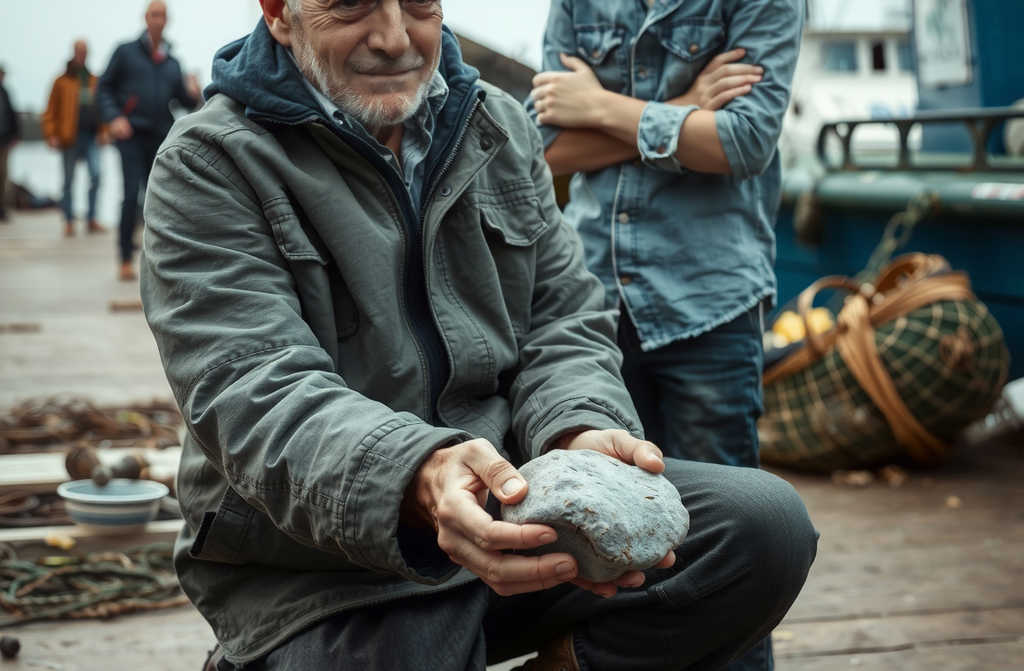
Hey love, Ive got a little story I have to shareit happened last August down on the Cornish coast, near the little fishing village of StIves. Picture this: a salty, warm breeze from the sea was ruffling the faces of the local fishermen while the relentless summer sun danced on the waters surface. The harbour was just as youd expectweatherworn planks, creaking ropes, the omnipresent scent of seaweed and brine. Each days work was the same routine: cleaning the nets, unloading the catch, swapping banter about the weather and whether the tide would be kind. Nothing at all hinted that anything extraordinary was about to unfold.
Then the miracle showed up right from the deep.
At first there was just a splasha wet, swift movement broke the surface and pingponged across the boards. Everyone glanced up. Right there on the quay sat an otter. A male, drenched, trembling, eyes wide with panic and pleading. He didnt bolt like a wild beast would. No, he shuffled among the fishermen, nudged a leg here and there with his little paws, let out a highpitched whimper, then dashed back to the edge of the pier.
What on earth is that? muttered one deckhand, dropping a coil of rope.
Leave it, itll wander off on its own, another replied.
But the otter didnt go. He kept begging.
One of the old fishermen, a weatherlined bloke named George, suddenly seemed to understand. He wasnt a biologist, didnt read any scientific journalsjust an instinct that harked back to the days when man and nature still spoke the same language.
Hold on a sec he whispered. He wants us to follow him.
He took a step toward the sea. The otter bolted forward, glancing back as if checking whether they were on his tail.
And then George saw it.
Caught in the tangled mess of old nets, bits of kelp and ripped ropes, a female otter was thrashing. Her paws were jammed, her tail flapped helplessly on the water. Every movement only drove her deeper into the snare. Beside her, a tiny pup bobbed on the surfacea little fluffball clinging to its mum, clueless about the danger, just feeling the looming threat of death.
The male otter whod brought help was perched on the piers edge, watching. He didnt whine, didnt dash offjust stared. In that stare there was more humanity than many humans show.
Quick! shouted George. Shes stuck in the net!
The fishermen rushed to the side. One leapt into a boat, another began cutting the net. The whole scene was a tense, wild hush broken only by the animals wheezing breaths and the slap of waves against the hull.
Minutes stretched into what felt like hours
When they finally freed the female, she was on the brink of collapse. Her body shivered, her paws barely moved, but the pup clung to her and she gave a soft lick.
Throw them back! someone yelled. Into the seafast!
They lowered the pair gently into the water. In that instantmother and pupdisappeared beneath the surface. The male otter, whod watched the whole thing in eerie stillness, dove after them.
Everyone stood frozen. No one said a word. Just breathing, as if theyd just come out of a battle.
A few minutes later, the water rippled again.
He was back.
All alone.
He emerged at the piers edge, looked at the crew, then, with a little effort, hauled a stone from between his front paws. It was grey, smooth, a touch wornclearly a favourite, marked by time and use. He placed it on the plank, right where hed first begged for help, and then vanished.
Silence. Not even the wind seemed to stir.
He he left us his stone? whispered a young lad, his voice barely more than a breath.
George knelt down, picked up the stone. It was cold, heavynot because of its weight, but because of what it meant.
Yeah he murmured, voice shaking. He gave us his most precious thing. To an otter that stone is like a heartits tool, its weapon, its toy, its memory. He carries it his whole life. Every otter finds its own stone and never parts with it. He doesnt just crack shells with it he loves it. He sleeps with it, plays with it, shows it to his kits. Its his family. Its his life.
And he gave it to us.
Tears rolled down Georges cheeks. He didnt hide them, and nobody else did either.
In that moment everyone got it: it was a thankyou. Not a bark, not a wag of a tail, not a grand gesturejust the most valuable thing the otter owned, handed over, like a person giving their last shirt to save a stranger.
Someone pulled out their phone. A short, twentysecond video captured the whole thing. That tiny clip spread like wildfire. People wrote:
I cried like a child.
Now I cant think of animals as machines any more.
I was angry at my neighbour earlier because of the noise and that otter gave everything for love.
Later, scientists said otters are among the most emotional creaturescrying when they lose their young, holding paws while they sleep to stay together, playing not because theyre hungry but because theyre happy. They have souls.
But that stone on the old pier was more than a souvenir. It was pure gratitude, untainted by any selfish motivesomething you rarely see even among us.
George still keeps that stone on a shelf next to his late wifes photographshe passed five years ago. He says that when the house is quiet, he looks at it and thinks, Maybe we could learn a thing or two from the animals.
Because in a world where everyone looks out for themselves, where kindness hides like a cavedweller, a tiny otter showed us that love and thanks are stronger than any instinct.
The heart isnt in the chest; its in the deed.
And the stone? Its a memory. A reminder that even in the wild, deep under the sea, theres something beyond mere survival.
It lives in the heart.
If youve got a minute, give this story a like, share it. Maybe someone who reads it will pause, see the world a bit differentlya runner spotting a dog not as a hurdle but a mate, a bird on a branch not as noise but as song, an animal not as a beast but as a brother.
And perhaps one day well all leave something on the shore not rubbish, but something truly valuable.
Like a stone.
Like a heart.
Like love.