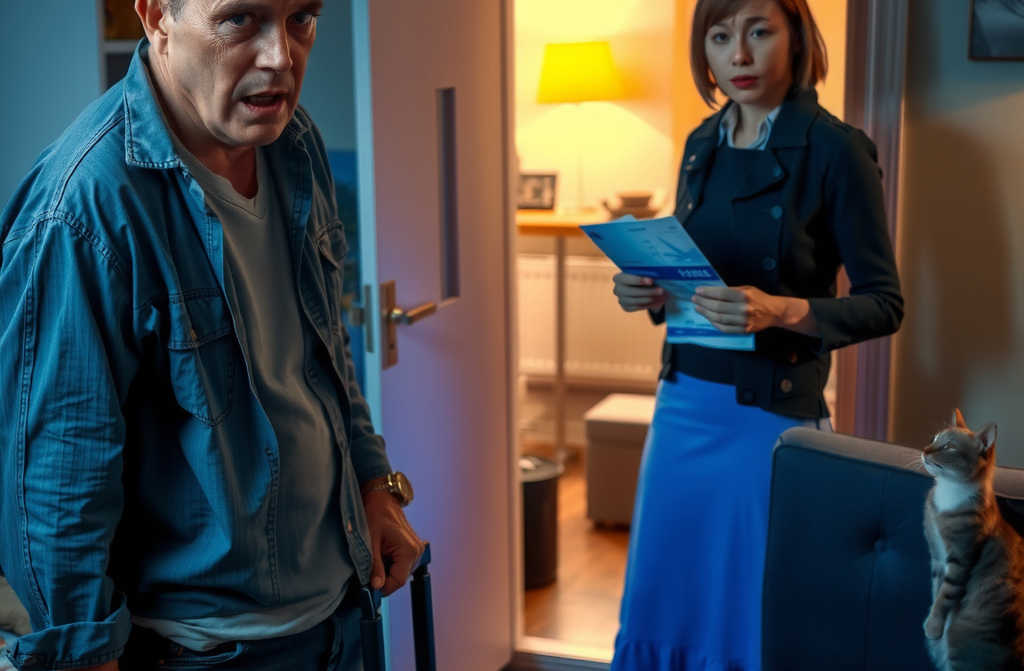
I suggested we keep our finances separate, and before I knew it she had saved up for a getaway, never asking my permission, and left me on my own.
James Whitaker, 52. You wanted a separate budget, James
But not *that* separate!
How separate? So Im the one who saves while you decide where I may spend?
Honestly, I still cant pinpoint the moment my brilliant plan turned against me. At first it seemed sensible, convenient and, above all, fair at least in my head, where I always picture myself as the chief strategist of the relationship and my partner as a diligent executor with no need for her own initiatives or decisions.
Im 52, not a teenager. Ive been married, divorced, made mistakes and learned a few lessons. When I met Poppy Hargreaves, 46, eight years ago, I was convinced I had finally found a woman with whom I could live quietly, without drama, without all these modern niceties about personal boundaries, financial independence and the like things I once thought only complicated a proper manandwoman partnership, where everything should be simple and clear: the man is the head, the woman is by his side.
We lived in my flat in York; it was always my property, a fact I would subtly remind her of, not bluntly, but in passing, so she wouldnt forget that her comfort came from me. And for a while everything was fine until an idea popped into my head that, as it later turned out, marked the beginning of the end for the system I was so pleased with.
Separate budget.
I floated the suggestion calmly, without pressure, thinking it even sounded noble. I explained that it was modern, honest and transparent, that every adult should be responsible for his own money, that this would erase complaints, misunderstandings and the endless who put in what debates. To my surprise Poppy agreed straight away, no arguments, no conditions, no hysteria she simply nodded and said:
Alright, lets give it a go.
Thats where, looking back now, I should have raised a red flag.
A woman who consents too quickly isnt always just obedient; sometimes shes already decided everything inside, and youre simply unaware of it.
The first months were perfect. We split the grocery bill, the council tax, utility costs each paid his own share and I felt everything was finally fair, without the feeling that I was being taken for granted. Frankly, Id sometimes been irritated that I seemed to be paying more, even though I tried not to show it; after all, a man should be generous, but within reasonable limits.
And then the magic happened.
Each of us for ourselves.
But, as I later discovered, each for themselves didnt just apply to expenses. It also meant freedom something I hadnt taken into account.
About six months in I started noticing that Poppy was changing. Outwardly she was the same cooking, cleaning, caring but there was a new calm, confidence, independence about her that began to unsettle me. I used to feel she relied on me to some degree; now she didnt.
She stopped consulting me. She stopped asking. She stopped getting my approval. At first it was the little things, then the bigger ones. I saw new purchases handbags, shoes, gadgets things I considered unnecessary, and I couldnt understand where she got the money, because we were both saving for a holiday.
Yes, wed agreed to plan a summer break together, each contributing, everything grownup. I trusted she would handle it responsibly, just as I intended.
Well not quite.
The truth was my own money was drifting. Id lent a few pounds to a mate, cleared some debts, bought a few odds and ends that seemed harmless, but by the end the sum I was supposed to have set aside for the trip was far from where it should have been. I didnt fret, assuming that together wed sort it out Id chip in here, shed chip in there after all, this was a partnership, not a ledger.
But Poppy saw it differently. To her, this was a ledger.
One evening she said, calmly, without any hint of anger:
Ive bought the tickets.
I was taken aback.
What tickets?
For the coast. Four weeks. With a friend.
Honestly, it felt like a punch to the gut.
With a friend? What about me?
You said it was a waste of money.
I remembered that a couple of months earlier shed suggested we go together, but Id dismissed it as unnecessary expense, insisting we could stay on a cottage or go for a walk in the countryside like normal folk. Id spoken; shed heard; shed drawn her own conclusion and acted on it without me.
You could at least have asked!
Ask about what? Those are my money.
And right there my world turned upside down.
Technically, they were her money, but it didnt feel right. It didnt feel like a family matter. It didnt feel like a mans role.
I tried to explain that decisions in a relationship arent made solo, that you cant just up and leave while Im left standing, as if my opinion meant nothing. She looked at me, composed, no shouting, no hysteria, and said:
You were the one who proposed a separate budget. I just followed the rules.
In that instant I realised the trap Id set for myself. In my version of a separate budget there was a tiny, unspoken clause: I decide, she merely participates. In practice she became an equal partner and that was the most uncomfortable part.
Equality isnt just about duties; it also grants rights. And I wasnt ready for that.
She flew away, leaving me with our cat, the bills, an emptyfeeling house that suddenly seemed alien, even though it had always been my domain, my space, my world where everything was under control. The control vanished, and for the first time in years I was truly alone not merely physically, but in the deeper sense.
She called, texted, sent photos from the seaside, described how relaxed she was, how the sea soothed her. Every message contained the one thing that irritated me most she didnt miss me. She didnt beg to come back, didnt feel guilty. Thats when I first wondered whether the problem lay not with her, but with me. Yet I still dislike that conclusion. Its easier to think she went off the rails, that she got spoiled, that she had too much freedom, rather than admit Id built a convenient model where a woman could be independent only so far as it didnt threaten my comfort. When her independence turned genuine, I became uncomfortable.
She returned after a month tanned, serene, a stranger. We live together again, but the dynamics have shifted. We no longer discuss money; she doesnt either. An invisible yet palpable line now runs between us a boundary.
And the most unsettling realisation is that it wasnt about the cash, not even the holiday. It was about seeing equality in practice, not just in words, and not liking what I saw.
The psychologists take
The story illustrates a classic clash between declared equality and an inner need for control. The man proposes a separate budget as a fair tool, yet expects an informal hierarchy where his word remains decisive and the woman remains a participant rather than an autonomous decisionmaker.
When the woman interprets the rules literally and begins acting as an independent agent, cognitive dissonance erupts: outward equality, inward loss of authority. This produces irritation, resentment and attempts to reestablish the old order through blame or moral pressure.
True equality cant be halfbaked. You cant split expenses while keeping decisionmaking in one partners hands. Financial independence inevitably brings independence in choice where to live, what to spend on, who to travel with.
The protagonists crisis isnt really his partners action; its the collapse of a familiar relationship model where he felt like the lead. Until he reexamines his expectations of a convenient woman, any venture toward genuine partnership will continue to breed inner conflict and disappointment.