Dear Diary,
Today I found myself wondering, Chris, are you out of your mind? Do you think Im offering you a place to live for a few quid? Its a bitter comment, but perhaps the only thing I can say.
Im perched in an old, cushioned wheelchair, staring through the dustcovered panes of my ward. The window looks out onto the hospitals inner courtyard, a tidy little square with tiny shops and flowerbeds, but its almost empty. Winter has settled in, and patients rarely venture out for a walk. Im alone in this room. A week ago my neighbour, Jack Thomas, was discharged to his flat, and since then the silence has settled over me like a heavy blanket.
Jack was a cheerful fellow, a storyteller who could turn any anecdote into a theatrical performance. He was actually studying drama on his third year, and his presence made any idle hour feel lively. His mother used to stop by every day with fresh scones, fruit, and sweets, sharing them generously with me. With Jack gone, the homely feeling that once filled this ward has vanished, leaving me feeling more isolated than ever.
My reverie was broken when a nurse entered. My mood sank further when I realised the cheerful young nurse, Daisy, had been replaced by the perpetually stern and everdissatisfied Margaret Archer. In the two months Ive spent here, Ive never seen her smile; her voice matches the sharpness of her expressioncrisp, rough, and uninviting.
Come on, settle back into bed! she barked, brandishing a syringe already filled with medication.
I sighed, turned my wheelchair reluctantly, and wheeled myself to the bed. Margaret deftly helped me lie down, then, with the same swift motion, flipped me onto my stomach.
Take your trousers off, she ordered. I obeyed, feeling nothing at all. She administered the injection with practiced skill, and I mentally thanked her for her competence.
I wondered, How old could she be? She seems like shes already retired, living on a modest pension that forces her to work and makes her so harsh.
When the thin needle finally slipped into the faint, pale vein on my gaunt arm, I winced just a little.
All done. Did the doctor see you today? she asked abruptly, already gathering her things.
No, not yet, I replied, shaking my head. Maybe later
Dont sit by the windowdrafts will make you feel as dry as a bone, she warned, then left the room.
I wanted to snap back at her, but there was a thread of concern beneath her brusqueness, however faint. Im an orphan; my parents died in a house fire when I was four. My mother, in a desperate act, threw me out of a shattered window just before the roof collapsed, saving my life at the cost of hers and my siblings. I survived, scarred on my shoulder and wrist where the glass cut me. That night I was taken to a childrens home. Relatives existed, but none offered shelter.
From my mother I inherited a gentle, dreamy nature and bright green eyes; from my father, a tall frame, a brisk gait, and a knack for numbers. Memories of them flicker like broken film strips: a village fête where I waved a bright flag with my mum, a summer breeze on my cheek as I perched on my dads shoulders. I also recall a ginger cat, perhaps called Whiskers or Bartholomew. All other keepsakes were lost in the fire, including a family photo album.
No one visited me in the hospitalthere was simply no one. When I turned eighteen, the state allocated me a bright, single room on the fourth floor of a council flat. Living alone suited me, though occasional pangs of loneliness made me want to weep. Over time I grew accustomed to solitude and even found its advantages.
Yet my childhood in the home left me uneasy. Watching other families at playgrounds, supermarkets, and on city streets reminded me of what I missedcompanionship, warmth, a sense of belonging.
After school I dreamed of university, but I fell short of the required grades and ended up at a technical college. I liked the courses, but fitting in with the other students was impossible. I was quiet and withdrawn, and they had little interest in me. I preferred books and scientific journals to noisy games or parties. Occasionally we talked, but only about coursework.
The same went for girls; my modesty didnt win me any points when more confident lads vied for attention. At eighteen and a half I still looked no older than sixteen, and I was often labeled the odd one out in my cohort. Still, it didnt bother me much.
Two months ago I was late for a class, sprinted across an icy pavement, and slipped on a slick underpass. I broke both legs. The fractures were complex, healing slowly and painfully, though the last few weeks have shown improvement. I hoped for discharge soon, but the prospect of returning to my flatwithout a lift or rampsfilled me with dread. Id be stuck in a wheelchair for who knows how long.
After lunch, Dr. Robert Abbott, a trauma surgeon, entered my ward, examined my xrays, and said:
Christopher, I have good news. Your bones are finally knitting together as they should. In a few weeks youll be on crutches. Theres no point staying here much longer; youll continue treatment as an outpatient. A discharge form will be ready within the hour. Someone will meet you?
I nodded silently.
Excellent. Ill call Margaret; shell help you pack. Take care, Christopher, and try not to end up back here.
I whispered a quiet I will as he left, and my thoughts turned to the future. Margaret interrupted my reverie.
Why are you still sitting? Theyre about to discharge you, she said, handing me a battered backpack from under the bed. Pack up. Nora Perkins will bring fresh linens.
I shoved my belongings into the bag, feeling her stare linger on me.
Did you lie to the doctor? she asked, tilting her head slightly.
Lie? I made a puzzled face.
Dont play the fool, Christopher. I know no ones coming for you. How will you get home?
Ill manage somehow, I muttered.
You wont be walking for at least another fortnight. How do you intend to survive?
Ill figure it out; Im not a child.
Suddenly Margaret sat on the edge of the bed, looking directly at me.
Christopher, this may not be my business, but with injuries like yours youll need help. You cant do it alone. Dont take it personally; Im speaking the truth, she said softly.
Ill manage on my own.
You wont. Ive been in nursing for years. What are you arguing about, boy?
What does it matter what you say?
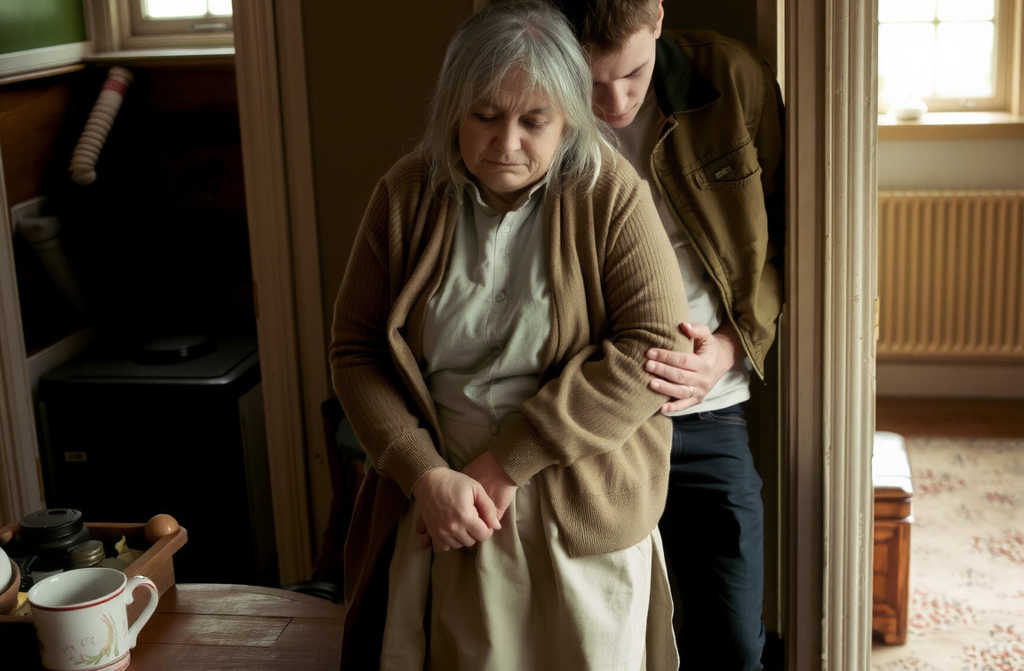
It matters because I can offer you a roof. I live on the outskirts of town; its just a couple of steps up to my front door. I have a spare room. Once youre on your feet you can return home. Im a widow, no children, and Im happy to have some company.
I stared, stunned. Living with a stranger? I had long stopped hoping anyone would look after me but myself.
Whats the matter? Margaret pressed, frowning.
Its awkward, and I, I stammered.
Stop the pretence, Christopher. Its uncomfortable to live in a flat without a lift or a ramp while confined to a wheelchair, she snapped in her usual blunt fashion, So, will you come to my place?
I hesitated. On one hand, moving into a strangers house felt unsettling; on the other, Id still be unable to walk unaided, and Margaret didnt seem entirely foreign after all.
Now I realise shes watched over me in her own way these weeksreminding me to close the window, to eat cheese for calcium, to keep the room tidy. Shes the only person whos truly offered help.
Ill stay, I finally said, but I have no moneymy scholarship wont arrive any time soon.
Margaret crossed her arms, stared at me, and with a hint of irritation replied:
Christopher, are you out of your mind? Do you think Im inviting you to live here for free? I feel sorry for you, thats all.
I was just, I began, but stopped midsentence, apologising for any offence.
Im not offended. Lets get you to the sister ward and wait there until my shift ends. Then well go.
Margaret lived in a small, tidy cottage with narrow windows. Inside were two cosy rooms; one of them became mine. In the first days I was shy, barely leaving the room, trying not to bother my host with requests.
Seeing my reluctance, the elderly nurse said outright:
Stop being shy. Ask for what you need; youre not a guest.
Truth be told, I liked it there: snow piled up outside, the crackle of logs in the stove, the smell of homemade stewit all reminded me of my own childhood home and a happier time.
Days passed. My wheelchair was left behind, then my crutches. Soon it was time to return to the city.
After another checkup at the clinic, Margaret walked beside me, both of us limping a little, and we talked about the weeks ahead:
I need to sit my exams, do my assessments. Ive lost so much timeit feels like a nightmare. I dont even want to think about a degree.
Dont worry, Margaret said, Your technical college wont disappear. Start moving now, as the doctor advisedto reduce the load on your legs.
Over the past weeks we grew close. I found myself not wanting to leave that snug cottage or the endlessly kind woman whod become a second mother to me, even though I never had the courage to admit itto her or to myself.
The next morning I was packing my things. While hunting for my phone charger, I turned and saw Margaret standing in the doorway, tears streaming down her cheeks. Something inside me surged, and I walked to her, wrapping my arms around her tightly.
Will you stay, Christopher? she whispered through her sobs, What will I do without you?
And I stayed.
Years later, Margaret sat proudly by my side at my wedding, a place of honour beside my new wife. A year after that, she held my newborn granddaughter, named after her, in the maternity ward.
Looking back, I realise that the world often feels cold and indifferent, but kindness can appear where you least expect it. Ive learned that pride should never keep you from accepting help, and that opening your heart to others creates a family where none existed before.
Lesson learned: vulnerability is not weakness; it is the bridge that connects us to the people who can lift us up.